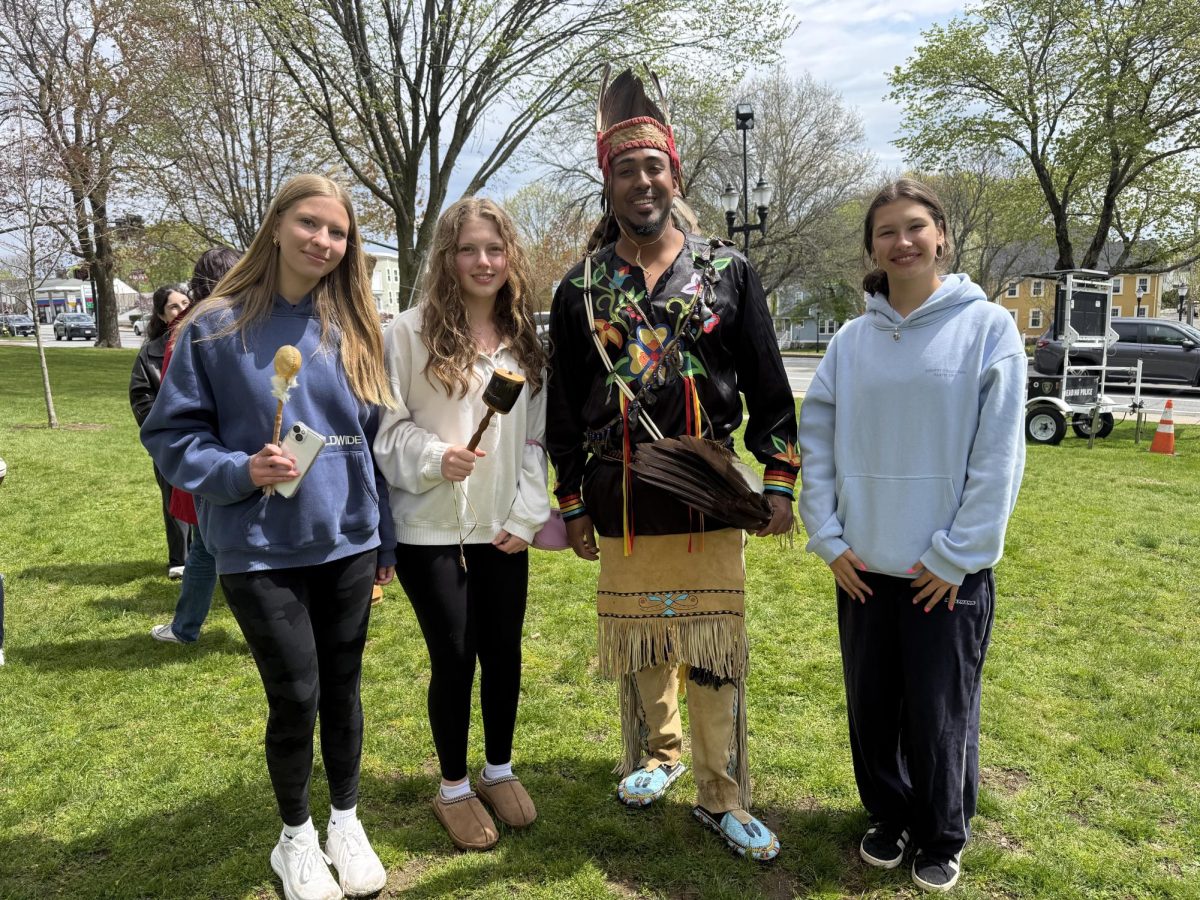
On May 2nd The Wampanoag Nation Performers brought their traditions to the town common thanks to a Massachusetts Department of Education Genocide Education Grant won by the RMHS social studies department and the Reading Public Schools.
The event drew an audience from students, families, and children across the Reading Community. The gathering became an exercise in cultural immersion as the performers enthusiastically shared traditional songs and dances with the crowd.
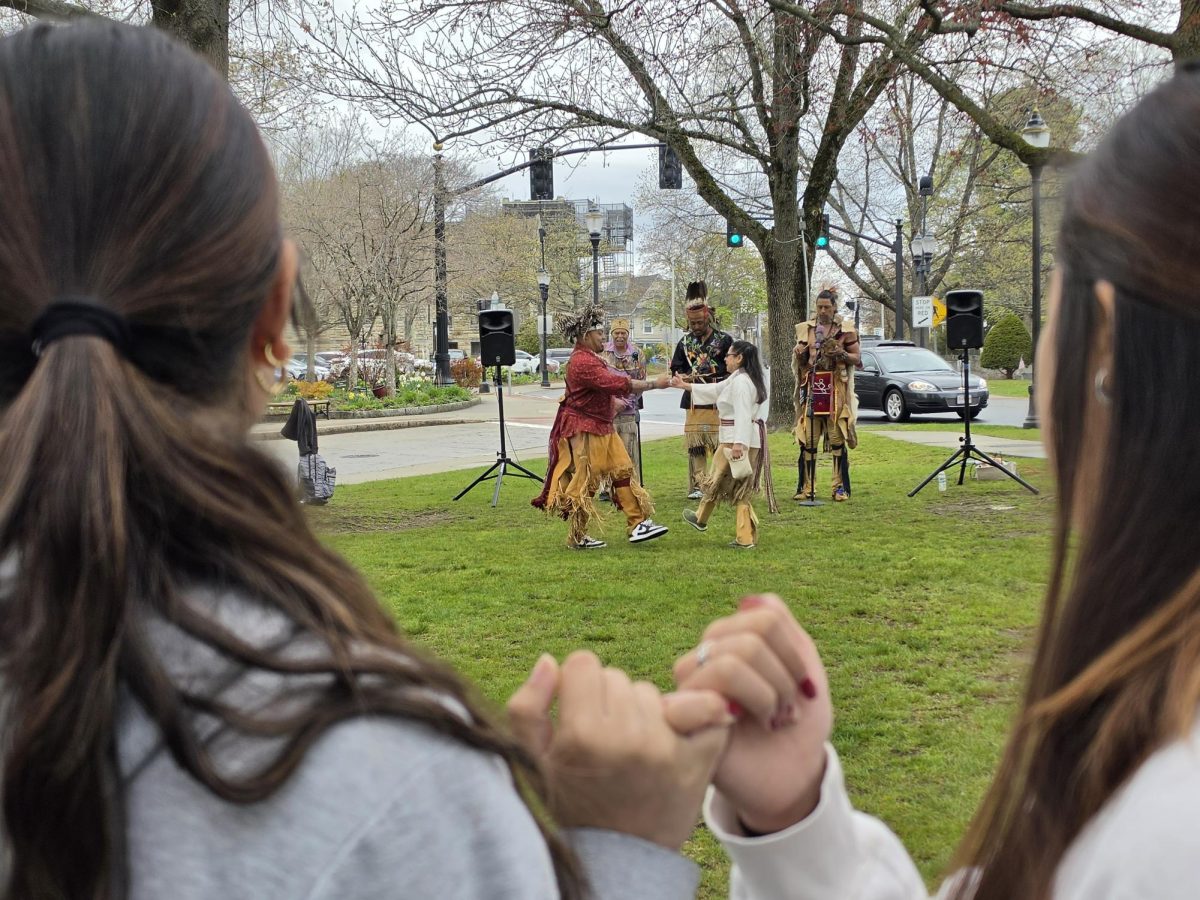
The event kicked off with a Wampanoag dance called the “Mosquito Dance.” Two partners interlocked pinkies, kicked out their legs, and spun to the rhythm of the song. The audience did not hesitate to join, immediately finding partners and attempting to copy the performers’ moves.
Later, the performers invited questions from the audience and spoke proudly about what community means to them and their purpose in spreading their culture.
When asked what they hoped people would understand after hearing their songs and dances, performer Annawon Weeden responded, “This is about community and it is important that we know each other and social songs are how we get to know each other.”
Performers also shared messages of resilience to the audience.
“We are here to share our culture and show that we are still here and not something from the past. Resilience is taking traditions from our past and preserving life, and protecting our land.”
One phrase that performers repeated throughout the event was, “We are the land and the land is us.” This is a foundational Indigenous philosophy which emphasizes that humanity is not separate from nature. It is a spiritual and emotional connection, meaning as people take care of the land, the land takes care of them.
After the performance, performer Attaquin Weeden explained the meaning of powwows, which were mentioned several times during the event.
“A powwow, traditionally, was a ceremony of healing. It was a healing for either a person or a community. And at these events, there was a pau wau. That was the medicine person…Roger Williams, he took note of a lot of these things that were going on. And the word powwow comes from pau wau. And so at these powwows, they have changed it a little bit, but our communities still come together to be thankful and to basically exhibit our culture and to express that we’re still here. And so powwows are a teaching for the community, but it’s also a time for us to come together as a reunion and to all be in the same state of mind.”
In an email interview, RMHS history teacher Mrs. Howie explained how the history teachers managed to bring the Wampanoag performers to the town common. She explained, “Reading Memorial High School was awarded the Department of Education Genocide Education Grant for the 2025-2026 school year.” The grant’s goal is, “to establish a consistent, research-based approach to genocide education that will equip students with the historical knowledge and critical thinking skills necessary to recognize and combat prejudice, discrimination, and the conditions that lead to genocide.” Through this grant, the history department was able to connect lessons about genocide and culture to a local and community centered event. Instead of limiting genocide education to classroom discussion, the event allowed students and families to experience Indigenous culture directly through music and dance.
When choosing the type of event, they considered making sure that it was, “accessible to all ages and focused on resilience as a starting point for conversations about genocide.” The focus on resilience is important because it shifts viewing Indigenous culture only through tragedy and loss. Instead, it highlights how the cultures are still alive and thriving today.
Throughout the event, they hoped to accomplish many things. As stated on their website, “The mission of the Wampanoag Nation Singers and Dancers Is to preserve and carry Northeastern Woodlands social songs and dances. To cultivate, nurture, and pass on these traditions to Wampanoag tribal youth and community; to ensure these songs continue to be used for social gatherings, ceremony and celebration for generations to come.” Their mission demonstrates how cultural performance can serve as preservation. Songs and dances are not only forms of entertainment, but also ways of passing down history and identity.
The event offered more than just entertainment, it gave the Reading community a chance to learn directly from the Wampanoag people about a local Indigenous culture and the importance of community.
For more information about the Wampanoag Nation and upcoming Powwows, please visit PowWows.com or MashpeeWampanoagTribe.gov.